
As an Amazon Associate I earn from qualifying purchases and sometimes recommend products from other sellers at no extra cost you. For more details see my disclosure policy and privacy policy.
Bombay Sapphire sits in more UK drinks cabinets than almost any gin bar the classics, and that blue bottle is doing a lot more than looking good on a shelf. The range has quietly grown well beyond the original London Dry, with a fruit-infused Bramble, a higher-strength Star of Bombay and a handful of limited releases most people walk straight past.
This guide runs through every bottle currently in the range, how to serve each one, and nine cocktails built to match. Whichever version is in your cupboard, there’s a proper drink for it here.
Contents
🍇 What Makes Bombay Sapphire Different
Bombay Sapphire is a London Dry gin distilled at Laverstoke Mill in Hampshire, using a vapour infusion method rather than boiling the botanicals directly in the spirit. Ten botanicals, including juniper berries, coriander, angelica root, lemon peel and grains of paradise, sit in a mesh basket above the spirit as it distils, picking up aroma from the vapour instead of the liquid.
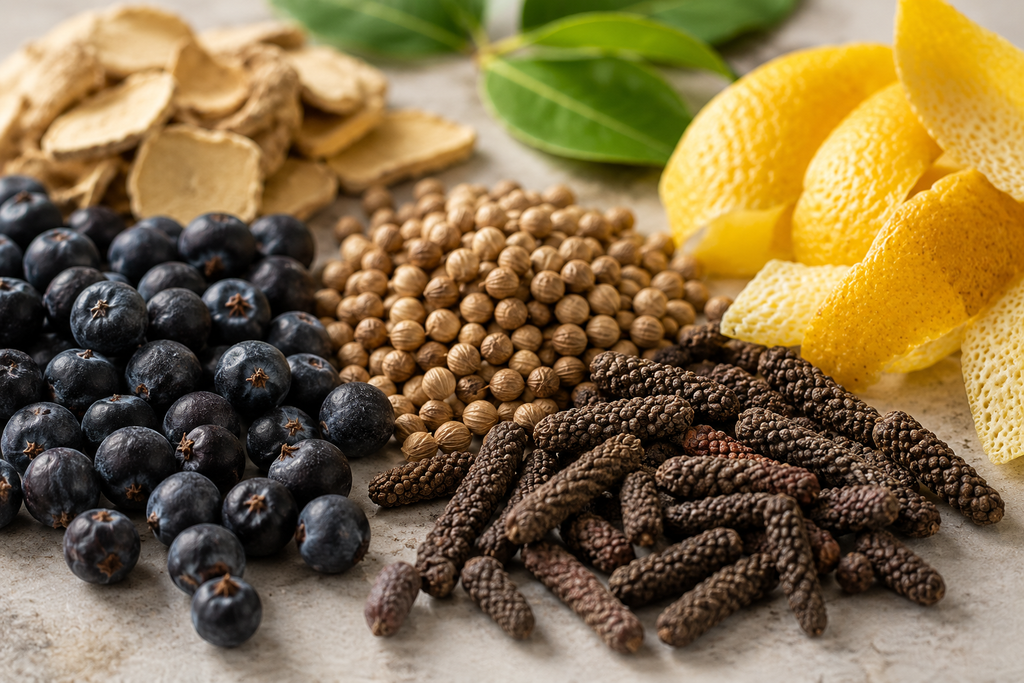
The result is a lighter, more citrus-forward gin than a lot of traditional London Dry styles, which is part of why it works so well as a base for cocktails rather than just a gin and tonic pour. Bombay Sapphire is owned by Bacardi and remains one of the best-selling premium gins in the UK, with the blue bottle inspired by the Star of Bombay sapphire.
🧊 The Full Bombay Sapphire Range
The core range has expanded a fair bit in recent years. Here’s what’s currently available and what each one is built for.
Bombay Sapphire London Dry Gin — 40% ABV. The original recipe and the one most people mean when they say “Bombay Sapphire.” Around £19 to £24 for 70cl at UK supermarkets, often cheaper with a loyalty card price at Tesco or Sainsbury’s.
Bombay Sapphire East — 42% ABV. The same base recipe with Thai lemongrass and Vietnamese black peppercorn added, giving it a spicier, slightly warmer finish than the original.
Bombay Bramble — 37.5% ABV. Infused with blackberries and raspberries rather than sweetened or artificially flavoured, so the fruit character comes through as tart rather than sugary. Around £22 for 70cl.
Star of Bombay — 47.5% ABV. A higher-strength, super-premium expression with bergamot orange peel and ambrette seed added to the classic blend, distilled in small batches. Usually £28 to £31 for 70cl.
Bombay Sapphire Premier Cru — a newer, limited-release pair (Tuscan Juniper and Murcian Lemon) built around a single standout botanical from a specific growing region. Worth seeking out for sipping neat rather than mixing, and availability varies by retailer.
Bombay Sapphire Sunset — a limited edition built around warming spice and Spanish mandarin, designed for early evening serves rather than a straight G&T.
Bombay Sapphire English Estate — a limited edition using pennyroyal mint, rosehip and toasted hazelnut alongside the classic botanicals, inspired by the hedgerows around the Laverstoke Mill distillery.
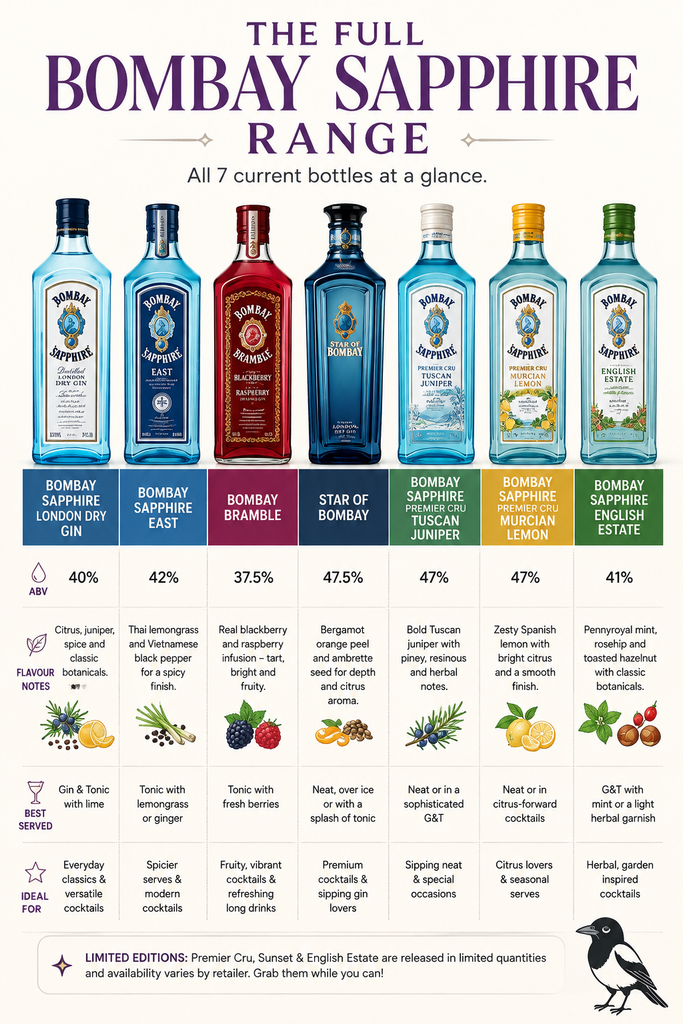
The limited editions come and go, so if you spot one of the last three on a shelf, it’s worth grabbing while it’s there.
🍸 How to Serve Each One
The classic serve for Bombay Sapphire is one part gin to three parts good tonic water, poured over plenty of ice with a slice of lime or a twist of lemon peel. Bombay Sapphire East pairs well with a stick of lemongrass or a slice of ginger instead of lime, which plays up the spice from the extra botanicals.
Bombay Bramble is best kept simple: tonic, ice, and fresh berries rather than citrus. Star of Bombay can take a splash of tonic but also holds up neat or over a single large ice cube, since the higher ABV and bergamot notes give it more to say on their own.
🥂 Bombay Sapphire Cocktail Recipes
Classic Bombay Sapphire Gin & Tonic
The easiest way to taste what makes Bombay Sapphire different from a supermarket own-brand gin.
- Ingredients: 50ml Bombay Sapphire, 150ml tonic water, lime wedge
- Method: Fill a highball glass with ice. Pour in the gin, top with tonic, and stir once gently. Garnish with the lime wedge.
Bombay Sapphire Negroni
Bombay Sapphire’s own version of the Negroni, built with equal parts across the board.
- Ingredients: 25ml Bombay Sapphire, 25ml sweet vermouth, 25ml Campari, orange zest
- Method: Fill a rocks glass with ice, add all three ingredients, and stir for 20 to 30 seconds until well chilled. Garnish with a wide strip of orange zest, expressed over the glass.
Sapphire Dry Martini
A cleaner, drier take on the Martini that lets the botanicals do the work.
- Ingredients: 50ml Bombay Sapphire, 10ml dry vermouth, lemon twist
- Method: Stir the gin and vermouth over ice in a mixing glass for 30 seconds. Strain into a chilled Martini glass and finish with a lemon twist, expressed over the drink before dropping it in.
Bombay Sapphire Gimlet
A sharper, more citrus-forward option than the Gimlet’s traditional lime cordial base, using the botanicals in Bombay Sapphire to carry it.
- Ingredients: 50ml Bombay Sapphire, 20ml fresh lime juice, 15ml simple syrup
- Method: Shake all ingredients hard with ice for 10 to 15 seconds. Double strain into a chilled coupe glass.
Sapphire Bramble
A fruitier alternative that leans on Bombay Bramble rather than trying to fake berry flavour with syrup.
- Ingredients: 50ml Bombay Bramble, 25ml fresh lemon juice, 15ml simple syrup, fresh blackberries
- Method: Fill a rocks glass with crushed ice. Shake the gin, lemon juice and syrup with cubed ice, then strain over the crushed ice. Garnish with fresh blackberries. For the full history of this style, see the classic Bramble cocktail recipe.
East Mule
Bombay Sapphire East’s lemongrass and pepper notes work particularly well against ginger beer, in a spin on the Moscow Mule.
- Ingredients: 50ml Bombay Sapphire East, 20ml fresh lime juice, 120ml ginger beer, lime wheel and mint sprig
- Method: Fill a copper mug or highball with ice. Add the gin and lime juice, top with ginger beer, and stir gently. Garnish with a lime wheel and mint sprig.
Star of Bombay French 75
The higher ABV and bergamot notes in Star of Bombay hold their own against Champagne, which most standard gins can’t quite manage.
- Ingredients: 40ml Star of Bombay, 15ml fresh lemon juice, 10ml simple syrup, 75ml chilled dry sparkling wine, lemon twist
- Method: Shake the gin, lemon juice and syrup with ice, then strain into a Champagne flute. Top slowly with the sparkling wine and finish with a lemon twist.
Sunset Spritz
Built around the warming spice and mandarin notes in the Bombay Sapphire Sunset limited edition, for an early evening alternative to a straight G&T.
- Ingredients: 40ml Bombay Sapphire Sunset, 20ml bianco vermouth, 80ml soda water, orange wheel
- Method: Fill a wine glass with ice. Add the gin and vermouth, top with soda water, and stir gently. Garnish with an orange wheel.
English Estate Garden Cup
A long, low-ABV serve that plays to the mint and rosehip in the Bombay Sapphire English Estate edition. Good for a garden party where a full-strength Martini isn’t the goal.
- Ingredients: 40ml Bombay Sapphire English Estate, 15ml elderflower cordial, 100ml lemonade, fresh mint sprig, cucumber ribbon
- Method: Fill a highball with ice. Add the gin and elderflower cordial, top with lemonade, and stir once. Garnish with mint and a cucumber ribbon.
❓ Bombay Sapphire FAQ
Is Bombay Sapphire good for cocktails, or just gin and tonic? Bombay Sapphire works well in most classic gin cocktails because it’s lighter and more citrus-led than many London Dry gins, which stops it overpowering other ingredients in a Martini or Negroni.
What’s the actual difference between Bombay Sapphire and Star of Bombay? Star of Bombay is distilled at a higher strength (47.5% ABV against 40%) with two extra botanicals, bergamot orange peel and ambrette seed, giving it more weight and a longer finish than the standard bottle.
Can Bombay Bramble be used in a Negroni or Martini? It can, but the fruit character tends to clash with Campari or dry vermouth. Bombay Bramble works best in simpler serves like a G&T or the Sapphire Bramble recipe above, where the berry flavour has room to lead.


