
As an Amazon Associate I earn from qualifying purchases and sometimes recommend products from other sellers at no extra cost you. For more details see my disclosure policy and privacy policy.
Picture a chilled glass of white wine on a warm evening, condensation running down the glass, the first sip crisp and cold. That single description could mean a dozen different wines. White wine isn’t one drink. It’s a whole category stretching from bone-dry and searingly acidic to lusciously sweet, from light as spring water to as rich as melted butter.
This guide walks through every major type of white wine you’re likely to come across: the grape varieties, the sweetness spectrum, body and weight, and how to match each style with food. Whether you’re trying to put a name to a wine you loved on holiday or you’re standing in a shop wondering what on earth to pick, you’ll find your answer here.
Contents
🍇 What Is White Wine?
White wine ranges in colour from pale straw to deep amber. It’s made by fermenting the juice of white grapes, or occasionally black grapes with the skins removed before fermentation begins, which is exactly how many Champagnes get their pale colour from red Pinot Noir grapes.
The process involves careful grape selection, tightly controlled fermentation temperatures, and sometimes ageing in oak barrels. Winemakers can push the same grape in wildly different directions depending on these choices, which is why two bottles of Chardonnay can taste like completely different wines.
White wine accounts for a growing share of global wine drinking. It has overtaken red in overall popularity in recent years, partly driven by demand for lighter, more refreshing styles, and that shift shows no sign of reversing.
How Does White Wine Differ From Red Wine?
The biggest difference comes down to skin contact. Red wine ferments with its grape skins, which is where the colour, tannin and structure come from. White wine skips that step, or keeps it very brief, which gives most whites their lighter body and higher acidity compared with reds.
That’s the traditional rule, at least. One of the biggest style shifts in wine right now bends it completely, and we’ll get to that a little further down.
🍷 The Most Popular Types of White Wine
If you only learn a handful of names, these are the ones you’ll see on every wine list and supermarket shelf.
- Chardonnay – ranges from lean and citrusy to rich, buttery and oaked
- Sauvignon Blanc – crisp, high acid, notes of grass, gooseberry and citrus
- Pinot Grigio (Pinot Gris) – light, easy-drinking, subtle stone fruit
- Riesling – high acidity, anything from bone dry to intensely sweet
- Moscato – lightly sparkling, low alcohol, peach and orange blossom
- Chenin Blanc – versatile, ranges from dry to sweet to sparkling
- Pinot Blanc – light, crisp, apple and pear
- Viognier – full-bodied and aromatic, peach and honeysuckle
- Albariño – zesty and saline, a natural match for seafood
- Sémillon – waxy and full-bodied on its own, famous in sweet Sauternes blends
According to updated research from wine economists Kym Anderson and Signe Nelgen, Chardonnay is now the world’s most planted white wine grape variety, having overtaken Spain’s Airén, a grape most casual drinkers have never heard of despite its former dominance. That shift matters because Chardonnay’s rise reflects just how far the grape’s reach now stretches, from cool-climate Chablis to sun-baked Australian vineyards.
Chardonnay: Characteristics and Regions
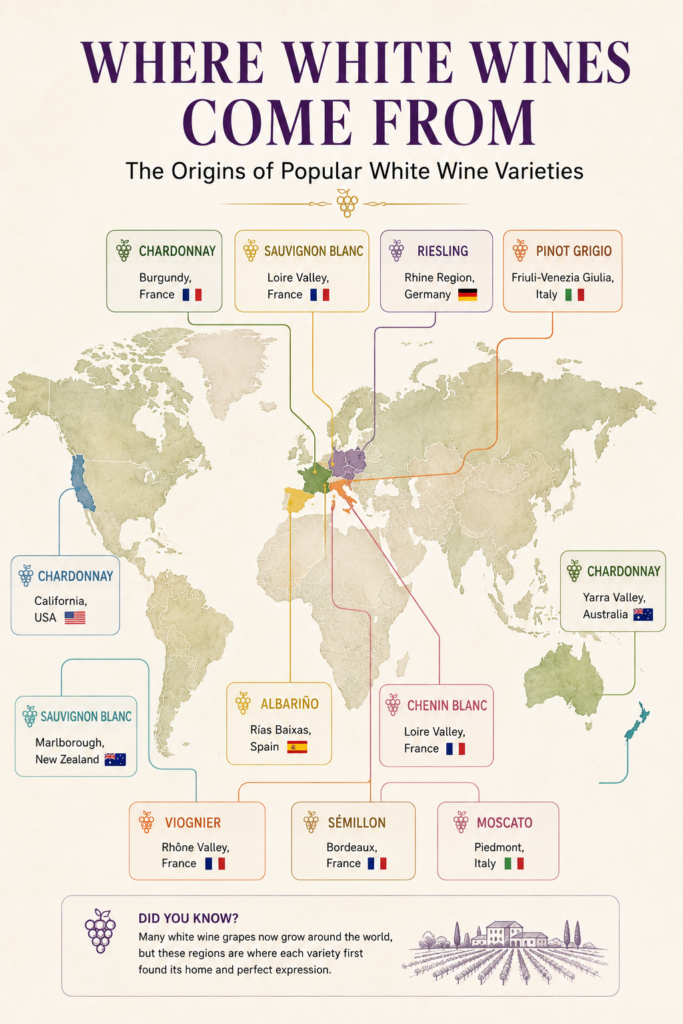
Chardonnay’s roots are in Burgundy, France, but it now grows almost everywhere wine is made. Cooler regions like Chablis and England produce lean, high-acid styles with green apple and citrus notes, while warmer regions such as California and Australia push it towards riper tropical fruit and, often, a heavier hand with oak.
Unoaked Chardonnay shows bright apple and pear. Oaked versions bring vanilla, butter and a creamy texture from time spent in barrel, which is where the “buttery Chardonnay” reputation comes from.
Sauvignon Blanc: Characteristics and Regions
Sauvignon Blanc is about acidity and aromatics. Expect grassy, green flavours alongside gooseberry, passion fruit and sometimes a green pepper note, all wrapped in mouth-watering acidity.
Sauvignon Blanc’s home is Bordeaux and the Loire Valley in France, but Marlborough in New Zealand has become just as famous for it, producing a bolder, more tropical style than the restrained French versions. If you want to go deeper on this one specifically, we’ve broken down exactly what Sauvignon Blanc tastes like in its own guide.
🌿 Lesser-Known Types of White Wine Worth Exploring
Once you’ve got the big names down, these varieties are worth seeking out for something different.
Gewürztraminer
Pronounced guh-vurtz-trah-mee-ner, this aromatic grape grows best in cooler climates like Alsace in France and Alto Adige in Italy. It produces intensely perfumed wines with lychee, rose petal, ginger spice and tropical fruit, usually with higher alcohol and lower acidity than most whites.
Its bold, spicy character makes it one of the few white wines that stands up to genuinely spicy food. Our full Gewürztraminer guide covers where to find the best examples.
Chenin Blanc
Chenin Blanc comes from France’s Loire Valley but has found its true second home in South Africa, where it’s now the most widely planted grape variety in the country. It’s remarkably flexible, capable of bone-dry, sweet, and traditional-method sparkling styles from the same grape.
Expect apple, pear, quince and honey, with high acidity holding everything together even in the sweeter styles.
Grüner Veltliner
Austria’s signature white grape is worth knowing if you’ve never tried it. It’s peppery, herbal and citrusy, often compared to a spicier cousin of Sauvignon Blanc, and it’s become a favourite among sommeliers for how well it pairs with tricky vegetable-heavy dishes.
🍭 Understanding Sweetness Levels in White Wine
Sweetness confuses more people than any other part of white wine, mostly because it isn’t tied to the grape itself. It comes down to how much residual sugar is left once fermentation stops.
Bone dry to dry: Most Sauvignon Blanc, Albariño, Pinot Grigio and unoaked Chardonnay fall here. Fermentation runs its full course, converting nearly all the grape sugar into alcohol.
Off-dry: German Kabinett Riesling and many Chenin Blancs sit in this middle ground, with just a touch of sweetness balanced by high acidity so the wine never tastes cloying.
Sweet to dessert-level: Moscato, late-harvest Riesling and Sauternes (a sweet blend built around Sémillon) stop fermentation early or use grapes affected by noble rot to concentrate sugar, resulting in wines that can taste like honey, apricot and marmalade.
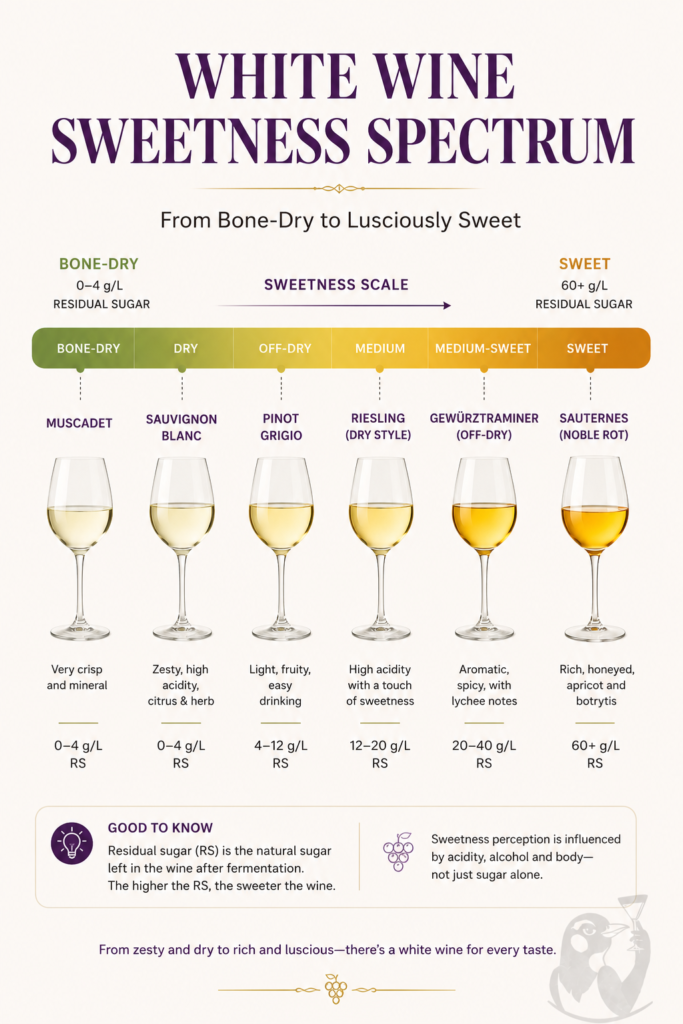
Winemakers also control sweetness through techniques like chaptalization (adding sugar before fermentation), süssreserve (adding back unfermented grape juice) or fortification. The result is one grape variety capable of producing wildly different wines depending on the choices made in the winery.
⚖️ White Wine Body: Light to Full
Body describes how a wine feels in your mouth, from watery and light to thick and almost creamy.
| Body | Examples | What to Expect |
|---|---|---|
| Light-bodied | Pinot Grigio, Albariño, Vinho Verde | Crisp, refreshing, best served well chilled |
| Medium-bodied | Sauvignon Blanc, unoaked Chardonnay, Chenin Blanc | Balanced acidity and fruit, versatile with food |
| Full-bodied | Oaked Chardonnay, Viognier, Sémillon | Rich, sometimes creamy texture, best slightly less chilled |
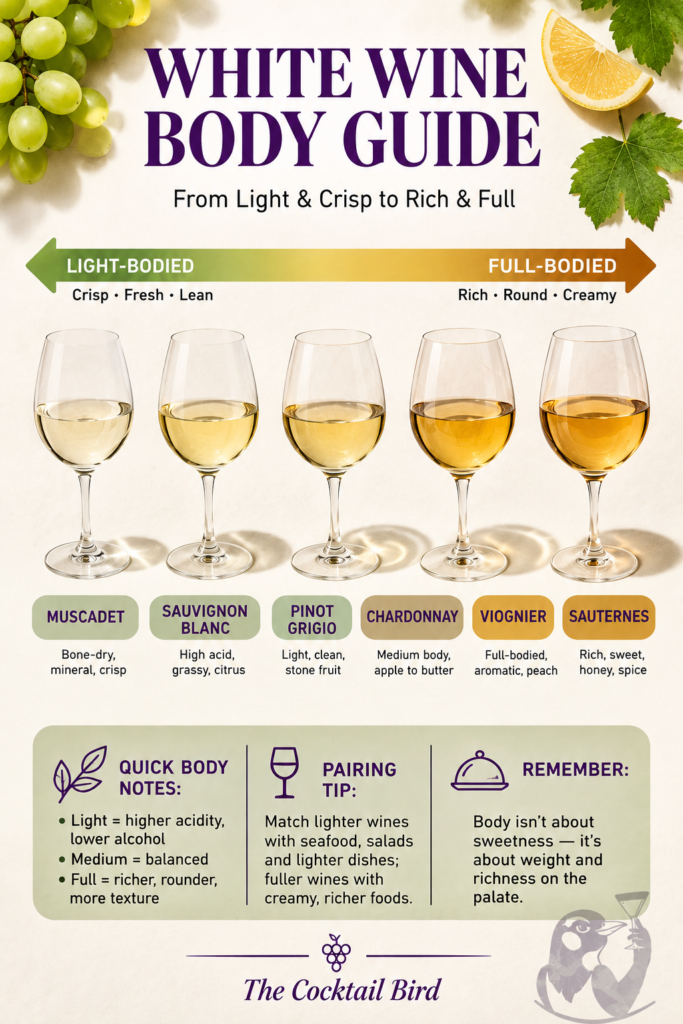
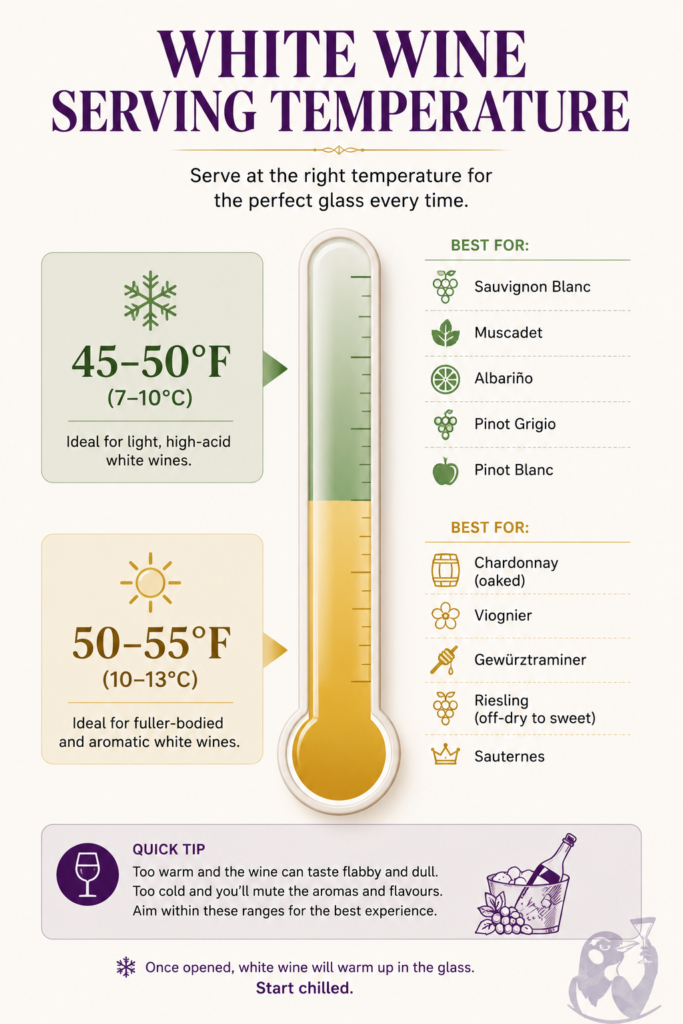
Lighter whites are best served colder, around 45-50°F, to keep their acidity feeling fresh. Fuller-bodied whites open up more at 50-55°F, letting their aromas and texture show through properly.
🍊 The Orange Wine Shift: When White Wine Breaks Its Own Rules
Remember that rule about white wine skipping skin contact? One of the defining wine trends right now involves fermenting white grapes with their skins, the way red wine is made, which produces a wine that’s orange in colour with more tannin, structure and savoury notes of dried fruit and tea than a typical white.
Orange wine has moved well past being a curiosity and found its own place at the table, increasingly treated as an autumn and winter staple. It’s a genuinely different drinking experience from a crisp Sauvignon Blanc, closer in feel to a light red, and it’s worth trying if you want to understand where white wine is heading next. We’ve written a full guide to orange wines if you want to try one for yourself.
Alongside orange wine, low and no-alcohol whites have moved from a niche compromise into a genuinely well-made category, giving anyone cutting back on alcohol a proper alternative rather than a diluted afterthought.
🍽️ Food Pairing With White Wine
General rule of thumb: white wine’s acidity makes it brilliant at cutting through rich or creamy food, and its lighter body suits lighter proteins like fish and chicken far better than a heavy red would.
Chardonnay and Sauvignon Blanc: A full-bodied, oaked Chardonnay stands up to lobster, crab cakes or roast chicken, where its creamy texture matches the richness of the dish. Sauvignon Blanc’s zesty acidity is the better match for tangy goat’s cheese, fresh salads or anything with a squeeze of lemon.
Gewürztraminer and Chenin Blanc: Gewürztraminer’s lychee and spice notes make it one of the only wines that genuinely works with spicy Thai or Indian food. A dry Chenin Blanc suits light seafood, while a sweeter style pairs naturally with fruit-based desserts.
Sparkling and sweet whites: Moscato’s low alcohol and gentle fizz make it a natural match for fruit tarts or a cheese board, while a glass of Champagne or English sparkling like a Champagne-style base wine works as well with salty snacks as it does at a celebration.
For a deeper dive into matching specific dishes with specific bottles, our full guide to pairing food with white wine has more detail than we can fit here.
🌡️ How to Serve White Wine
Temperature makes or breaks a white wine. Serve it too cold and you mask the flavour and aroma. Serve it too warm and it tastes flat, with the alcohol suddenly more noticeable than the fruit.
As a general guide, light-bodied whites like Pinot Grigio and Sauvignon Blanc taste best at 45-50°F, cold enough to keep their acidity crisp. Full-bodied whites like Chardonnay and Viognier prefer 50-55°F, warm enough to let their aromas properly open up.
Glassware matters too, though less than people think. A narrower-bowled glass helps funnel aroma towards your nose and keeps the wine cooler for longer, but don’t feel bound by tradition if you’ve only got all-purpose glasses to hand.
📊 White Wine at a Glance
| White Wine Type | Characteristics | Best Food Pairings |
|---|---|---|
| Chardonnay | Light and crisp when unoaked, rich and buttery when oaked | Lobster, crab cakes, roast chicken |
| Sauvignon Blanc | Crisp, dry, high acid, grassy and citrus notes | Goat’s cheese, fresh salads |
| Pinot Grigio | Light, dry, subtle citrus and stone fruit | Light seafood, salads, aperitif |
| Riesling | High acid, ranges from bone dry to very sweet | Spicy food, pork, apple-based dishes |
| Gewürztraminer | Aromatic, lychee, rose petal, ginger spice | Spicy Thai or Indian cuisine |
| Chenin Blanc | High acid, versatile, apple, pear, honey | Light seafood to fruit-based desserts |
| Orange wine | Skin-contact white, tannic, savoury, dried fruit | Charcuterie, aged cheese, roast vegetables |
🥂 Frequently Asked Questions About Types of White Wine
What are the main types of white wine? The main types include Chardonnay, Sauvignon Blanc, Pinot Grigio, Riesling and Moscato, though dozens of other varieties like Chenin Blanc, Viognier and Albariño are widely available too.
What is Chardonnay wine? Chardonnay is a green-skinned grape originating in Burgundy, France, now grown almost everywhere wine is made. It ranges from light, crisp and unoaked to rich, buttery and complex depending on how it’s produced.
What is Sauvignon Blanc wine? Sauvignon Blanc is a green-skinned grape from Bordeaux and the Loire Valley in France. It produces crisp, dry wines with citrus, gooseberry and tropical fruit flavours, with New Zealand, South Africa and California all producing notable versions.
What is Pinot Grigio wine? Pinot Grigio is a light-bodied white made from the grape of the same name, most associated with northern Italy’s Alto Adige region. It’s typically dry, pale in colour, with flavours of lemon, lime and fresh herbs.
What is Riesling wine? Riesling is a white grape capable of producing wines from bone dry to intensely sweet. The best examples come from Germany, Alsace and Australia, with high acidity and flavours of mineral, apple and white flowers.
What is Moscato wine? Moscato is a sweet, lightly sparkling white made from the Muscat grape, originating in Italy but also produced in California, Australia and South America. Expect peach, apricot and tropical fruit with relatively low alcohol.
What is Pinot Blanc wine? Pinot Blanc is related to both Pinot Noir and Chardonnay, producing light, crisp wines with apple, pear and mineral notes. Alsace in France and Alto Adige in Italy are the best-known regions for it.
What is Viognier wine? Viognier is a full-bodied, aromatic white grape known for peach, apricot and honeysuckle flavours. The northern Rhône in France and California’s Central Coast are its most famous growing regions.
What is orange wine? Orange wine is white wine made with extended skin contact, the way red wine is typically produced. It results in a wine with more tannin, texture and savoury depth than a standard white, and it’s one of the fastest-growing styles in wine right now.
Which white wine is the driest? Bone-dry styles include Muscadet, Albariño, most Sauvignon Blanc and unoaked Chardonnay, all of which ferment fully with no residual sugar left behind.
🍾 The Bottom Line
White wine covers far more ground than most people realise, from a searingly dry Muscadet to a honeyed Sauternes, from a crisp everyday Pinot Grigio to a structured, skin-contact orange wine that barely resembles the category’s own rules. Once you understand the handful of factors that shape a white wine, grape, region, sweetness and body, choosing a bottle stops being guesswork and starts being genuinely enjoyable.
Next time you’re standing in front of a wine shelf, you’ll know exactly what you’re looking for.


Great post! I did a similar article on the types of white wines that you might find interesting!